Fucking Stupid
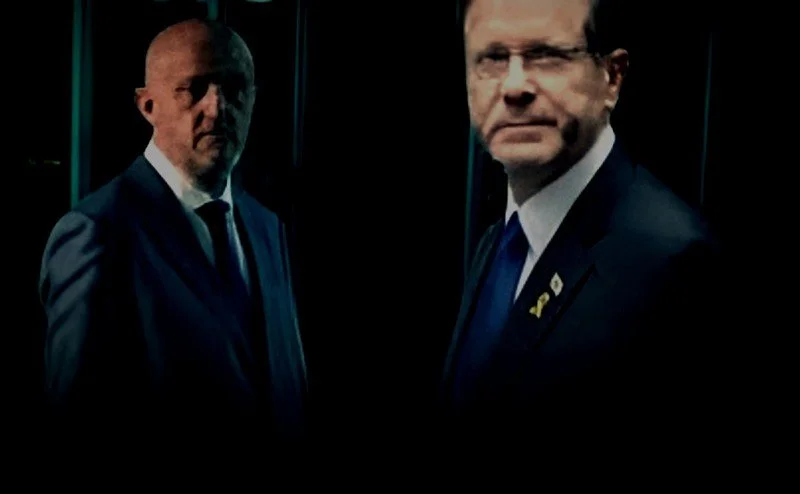
Sorry, but it’s the most appropriate title I could come up with for the post. The official explanation from the Australian government for Isaac Herzog’s visit was that he was invited by Albanese in the aftermath of the December Bondi Beach terror attack to offer comfort and solidarity to the Jewish community and help promote social cohesion after that traumatic event. That was the narrative put forward in parliament and in government statements about why the state visit was appropriate. What a crock of shit. It was an outright lie.
He engaged in diplomatic and political meetings with Australian leaders, had a breakfast meeting with business leaders, conducted media interviews and made public statements on broader political issues and had a secret meeting with the ASIO director.
News that he visited ASIO headquarters during his Australian trip sent shivers down any thinking person’s spine. This wasn’t a routine courtesy call at Parliament House or a symbolic wreath-laying. It was access to the nerve centre of our domestic intelligence apparatus. By all reports, no other visiting head of state has been afforded that particular privilege. That alone makes the decision extraordinary… or extraordinarily stupid.
Intelligence agencies are not symbolic venues; they represent the state’s most sensitive security functions. Opening those doors to a controversial foreign leader during an active conflict inevitably raises questions. What was discussed? What precedent has now been set? And why was it necessary at all? We need answers to these questions.
The controversy surrounding Herzog’s visit was already unavoidable. Israel stands accused before international courts and investigative bodies of grave breaches of international law in Gaza. The UN Independent International Commission of Inquiry on the Occupied Palestinian Territory has stated that Herzog made remarks amounting to direct and public incitement to commit genocide. Whether one agrees with that characterisation or not, it exists in the public record. Inviting such a figure to Australia in the midst of an ongoing and deeply polarising war was always going to inflame tensions here at home.
The responsibility for that invitation sits with All-American Albo. He bangs on incessantly about social cohesion and the need to lower the temperature in our national debate. Yet extending formal hospitality to a wartime leader facing such serious allegations sends the opposite message to many Australians, particularly those with family in the region or those already feeling unheard. It just sends a message that some lives and some forms of suffering carry more diplomatic weight than others.
There’s also a growing perception among some Australians that Albanese’s rhetoric, frequent high-profile meetings with Jewish community representatives, and targeted security funding announcements have created an imbalance in how different communities are engaged and supported. Fairly or unfairly, that perception has taken hold across the electorate, and decisions like this only deepen the sense that access and attention are not being distributed evenly. Albo knows it, and in my opinion, he doesn’t give a rat’s.
My last point is that there have been unsubstantiated claims circulating on social media suggesting that Burgess’s partner might hold dual Australian–Israeli citizenship or implying links to Israeli intelligence. From what I can gather, these come from user posts and chatter rather than verified journalism or official disclosures. These assertions haven’t been confirmed by credible sources and should be treated with caution. I’m far more sceptical about these kinds of things than most, but they just exacerbate the problems and should have been addressed by the government or Burgess himself when they first emerged.
If the aim of this fiasco was stability and unity, the optics alone have achieved the reverse. In a multicultural society where trust is fragile, decisions like this reverberate far beyond Canberra’s diplomatic circles. Social cohesion is not strengthened by gestures that many citizens interpret as partisan or tone-deaf. If anything, it underscores a widening gap between political rhetoric and political action, and that gap is where division can grow.
