3000 YEARS
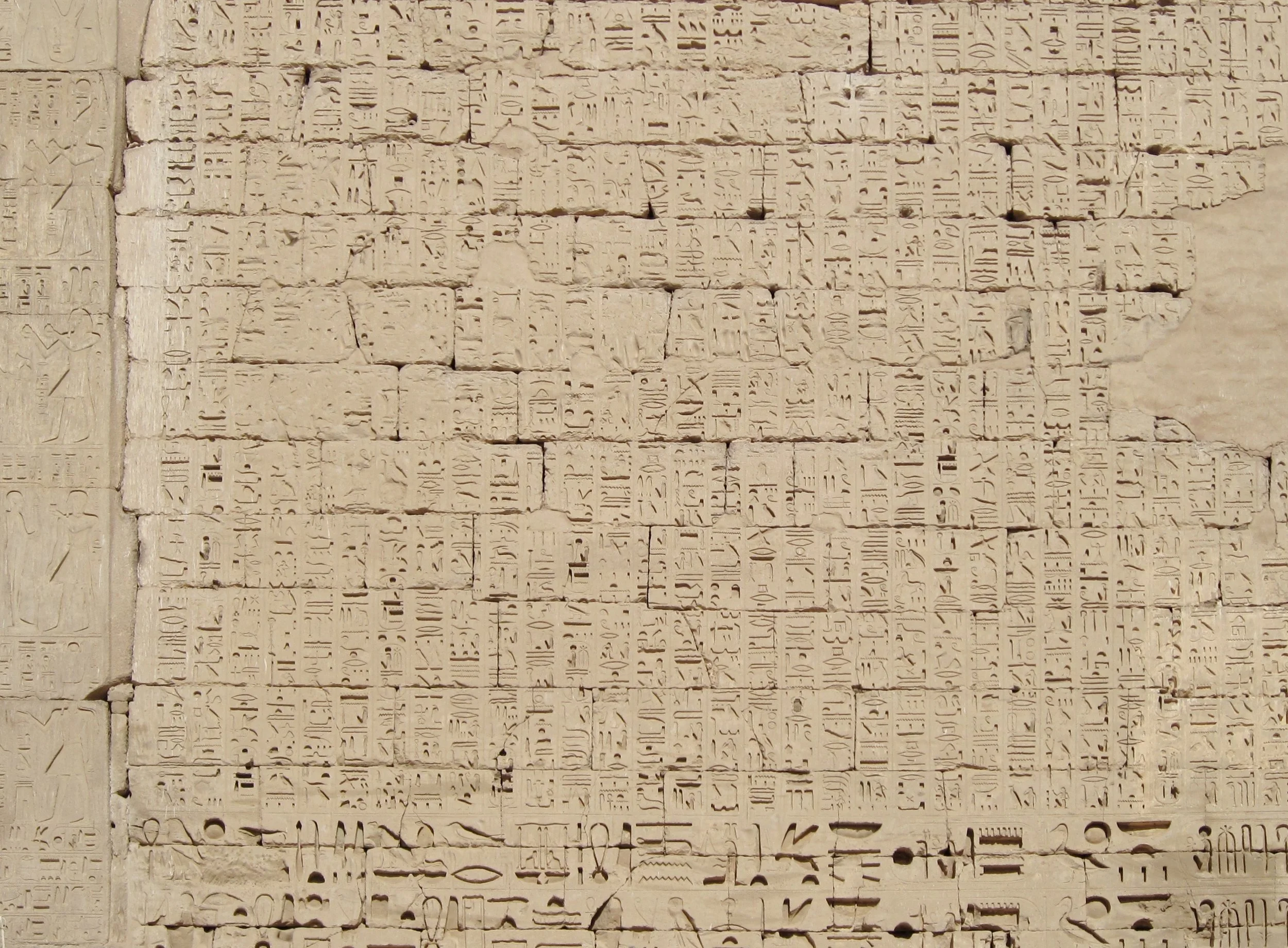
Medinet Habu inscription. Photo by Oltau
Here’s a chronological record of documented uses of the word “Palestine” or closely related forms (Peleset, Philistia, Palaestina, Filastin) from antiquity up to 1914. The intention is to show how the name evolved and continued to appear in different languages across more than three millennia.
Late Bronze Age and Early Iron Age
c.1150 BCE – Egyptian temple inscriptions at Medinet Habu describe the Peleset, one of the Sea Peoples defeated by Ramesses III. Many historians see this name as the earliest linguistic ancestor of “Philistine” and eventually “Palestine”.
c.1100–1000 BCE – Egyptian papyri and inscriptions from the same period continue mentioning Peleset settlements in the southern Levant.
Biblical and Ancient Hebrew Texts
c.1000–400 BCE – The Hebrew Bible refers repeatedly to Peleshet / Philistia, meaning the land of the Philistines. References appear in books such as:
Exodus
Isaiah
Joel
Amos
Psalms
The term describes the coastal region around Gaza, Ashkelon, Ashdod, Ekron and Gath.
Classical Greek References
5th century BCE – Herodotus uses the name “Palaistinē” when describing a region of the eastern Mediterranean within the Persian Empire. He refers to “the part of Syria called Palestine”.
4th century BCE – Aristotle refers to the Dead Sea in Palestine while discussing unusual natural phenomena.
Late 4th century BCE – Greek geographers increasingly apply the name Palaistine to the wider territory between Phoenicia and Egypt.
Hellenistic and Early Roman Writers
3rd century BCE – Greek historians of the Hellenistic world occasionally refer to Palaistine Syria, meaning southern Syria.
1st century BCE – Diodorus Siculus mentions Palestine while describing geography of the eastern Mediterranean.
1st century CE – Pliny the Elder describes Palestine in his encyclopaedic work Natural History.
1st century CE – Tacitus refers to Palestine while describing the history of Jewish revolts.
1st century CE – Flavius Josephus occasionally uses the Greek geographic terminology common in Roman writings.
Roman Administrative Usage
135 CE – After the Bar Kokhba Revolt, the Roman emperor Hadrian reorganised the province of Judaea and renamed it Syria Palaestina. This becomes the first formal administrative province named after a person.
2nd century CE – The geographer Claudius Ptolemy lists Palaestina in his work Geographia, mapping cities such as Gaza and Jerusalem.
Byzantine Era
4th century CE – The Eastern Roman (Byzantine) Empire divides the region into three provinces:
Palaestina Prima
Palaestina Secunda
Palaestina Tertia
4th century CE – Christian historian Eusebius of Caesarea uses the name Palestine frequently in his writings on the geography of the Holy Land.
5th century CE – Pilgrimage accounts by Christian travellers refer to “the Holy Land of Palestine.”
Early Islamic Period
630s CE – Following the Arab conquest of the Levant, the Rashidun Caliphate establishes Jund Filastin, a military district centred on cities including Jerusalem and Ramla.
7th century CE – Administrative documents from the Umayyad period refer to Filastin as part of the province of Bilad al-Sham.
10th century CE – Arab geographer Al‑Muqaddasi (born in Jerusalem) writes extensively about Filastin in his geographical works.
Medieval Islamic and European References
11th century – Islamic scholars, including Al‑Bakri, describe towns in Filastin.
12th century – Crusader chronicles frequently refer to Palestine when describing the territory captured during the Crusades.
12th century – Arab scholar Yaqut al‑Hamawi includes Filastin in his geographical dictionary.
13th–14th centuries – Pilgrims travelling to Jerusalem regularly describe their journey through Palestine in European languages.
Early Ottoman Period
1517 – The region becomes part of the Ottoman conquest of the Levant.
16th century – Ottoman administrative records divide the territory among several districts such as Jerusalem, Gaza, and Nablus, though the name Filastin continues in common use.
17th century – The jurist Khayr al-Din al-Ramli frequently uses the term Filastin in religious legal writings.
European Maps and Travel Literature
17th century – European atlases begin routinely labelling the region Palestina or Palestine.
18th century – Travel literature by European pilgrims commonly refers to journeys through Palestine.
Nineteenth-Century Scholarly Usage
1800s – Western biblical scholarship and archaeology widely adopted the term Palestine for the region.
1838 – American scholar Edward Robinson publishes major geographical studies of Palestine.
1840s–1860s – Numerous European maps label the territory Palestine.
1865 – The British organisation, the Palestine Exploration Fund, is founded to study the archaeology and geography of Palestine.
1870s – Large survey projects map the region extensively under the same name.
Late Ottoman Period
Late 1800s – Newspapers, travel guides and academic works across Europe and the Middle East commonly refer to the region as Palestine / Filastin.
1890s – Arabic-language publications in the Levant occasionally refer to the region as Filastin.
1911 – An Arabic newspaper titled Filastin begins publication in Jaffa.
1913 – European atlases and academic publications continue to label the region Palestine as a geographic term within the Ottoman Empire.
Overall Pattern
Across the historical record:
Egyptian inscriptions used Peleset
Hebrew texts used Philistia
Greek writers used Palestine
Romans used Palaestina
Arabs used Filastin
Europeans used Palestine
Despite changes in language and political control, a recognisable version of the name persisted continuously in historical records for more than 3000 years.
