GOD WILLS WHAT?
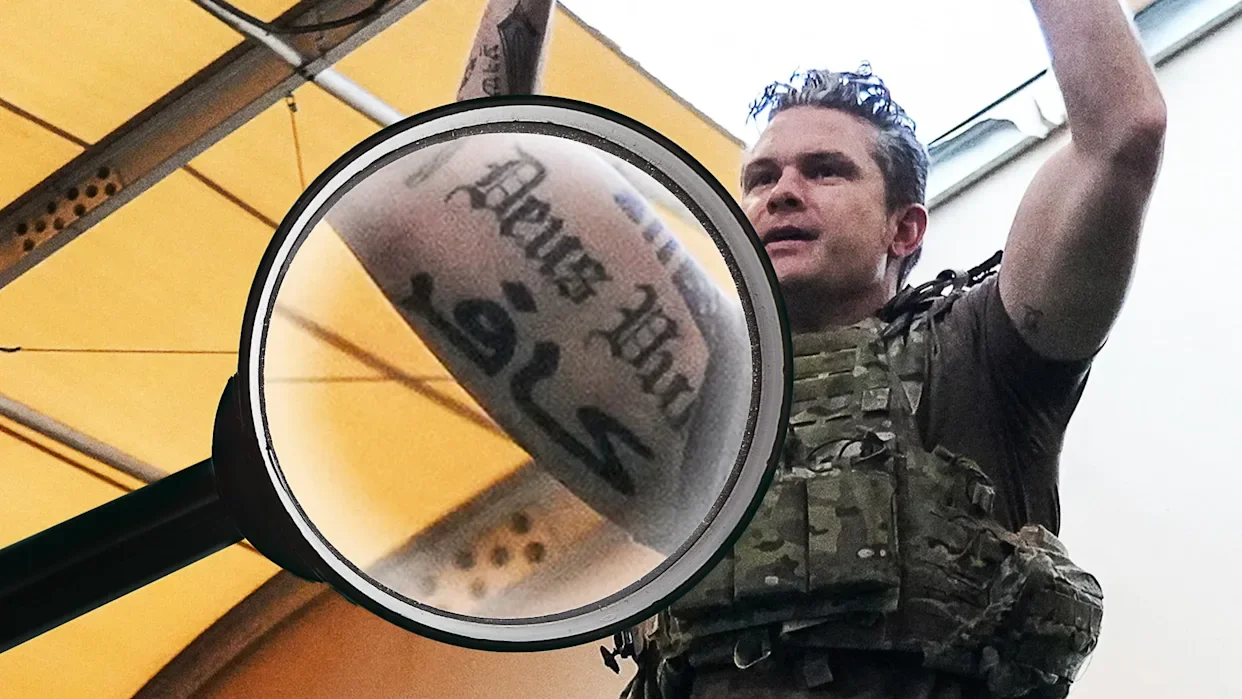
One of the great ironies surrounding Pete Hegseth is the gap between the Christianity he publicly embraces and the militaristic symbolism he seems drawn to. Christianity, at its core, is centred on humility, compassion, mercy, forgiveness, care for the poor, and the rejection of violence as a pathway to righteousness. Yet Hegseth has repeatedly wrapped himself in imagery and rhetoric tied to the Crusades — including the “Deus Vult” (“God wills it”) slogan and Crusader iconography that many historians and extremism researchers associate with modern Christian nationalism and anti-Muslim hostility.
That contradiction matters because these are not obscure historical references accidentally stumbled upon. Hegseth openly framed politics and foreign policy through the lens of a modern “crusade” in his own writing and public commentary. Critics, including military scholars and religious freedom advocates, have warned that this kind of rhetoric risks blurring the line between national defence and religious warfare. The irony is difficult to ignore: a faith built around loving one’s enemies and turning the other cheek is being invoked alongside symbols historically associated with holy wars, conquest, and civilisational supremacy.
There’s also a deeper contradiction in claiming devotion to Christian morality while enthusiastically supporting wars and policies that inevitably kill civilians, devastate communities, and destabilise entire regions. Many critics of American militarism — including Christians themselves — argue that modern nationalist Christianity in the United States often bears little resemblance to the teachings of Jesus, and far more resemblance to empire, power projection, and ideological dominance.
And let’s not forget that while he presents himself as a defender of Christian morality and traditional values, his personal history has been repeatedly overshadowed by allegations involving excessive alcohol use, sexual misconduct, and openly misogynistic attitudes toward women.
The second issue Australians need to confront is the damage our relationship with the United States has already caused. We’re often told the alliance guarantees security and stability, but history paints a far more complicated picture. Australia followed America into Vietnam, Iraq, and Afghanistan — wars that either failed outright or left countries shattered, destabilised, and traumatised for generations. Thousands of Australians returned physically or psychologically damaged, billions of public dollars were consumed, and Australia’s international reputation became tied to wars many now acknowledge were built on deception, exaggeration, or catastrophic miscalculation.
The Iraq War remains one of the clearest examples. Australia joined the invasion based largely on false claims about weapons of mass destruction. The war killed hundreds of thousands of people directly and indirectly, destabilised the Middle East, fuelled extremism, and contributed to one of the largest refugee crises in modern history. Yet Australia paid a political and moral price simply for following Washington’s lead. Many Australians increasingly question why our foreign policy so often appears subordinate to American strategic interests, even when those interests conflict with peace, international law, or regional stability.
The AUKUS agreement has intensified those concerns. Critics argue Australia is locking itself into decades of military dependence on the United States while sacrificing independent diplomacy and pouring hundreds of billions into nuclear submarines instead of healthcare, housing, climate adaptation, or public infrastructure. The agreement also risks making Australia a more prominent military target in any future US conflict with China. Rather than acting as an independent middle power focused on diplomacy and regional cooperation, Australia increasingly appears positioned as an extension of American military strategy in the Indo-Pacific.
That’s why figures like Hegseth matter beyond American domestic politics. When Australia ties itself ever more tightly to the United States military establishment, we also inherit the ideology, priorities, and worldview shaping that establishment. If influential figures within the Pentagon increasingly frame geopolitics in civilisational, religious, or ideological terms, Australians should be asking serious questions about where this alliance is leading us — and what costs we may ultimately pay for unquestioningly following America into its next confrontation.
