AUSSIE AUSSIE AUSSIE
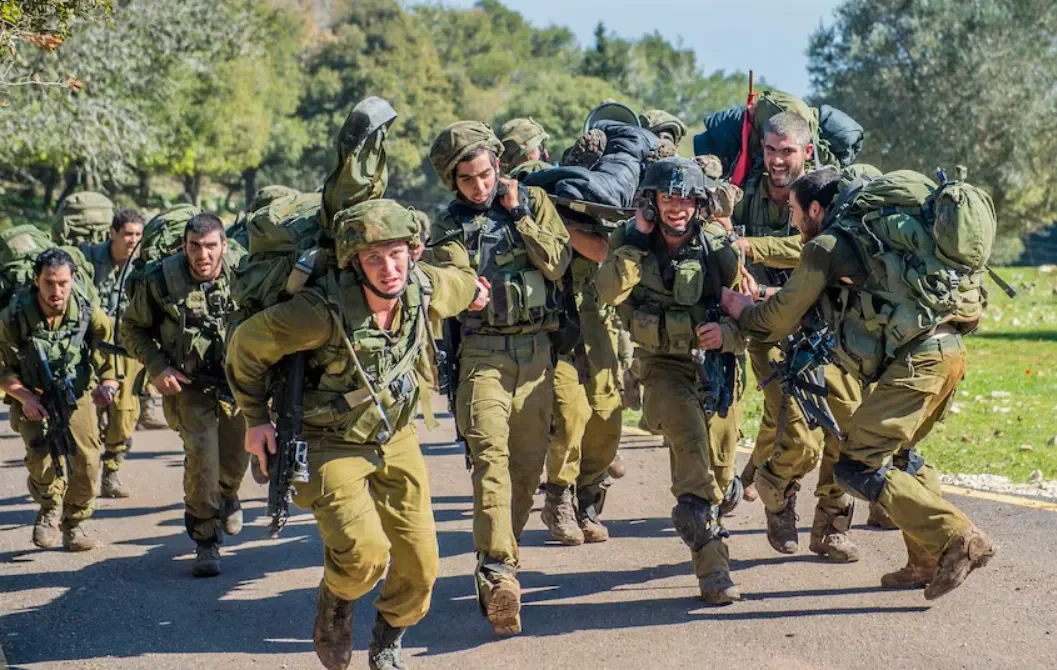
While the exact number of participants is not officially tracked by the Australian government, estimates from groups like the Australian Centre for International Justice and various media reports suggest that up to 1,000 Australians, including dual citizens and reservists, have been active in the IDF genocide since late 2023.
Many are dual Australian-Israeli citizens, already or previously living in Israel or were called up as part of the massive mobilisation of 360,000 reservists following the October 7 attacks. They represent a cross-section of the Australian-Jewish diaspora, ranging from young lone soldiers who moved to Israel specifically to serve, to older reservists who had previously completed their mandatory service but were called back to duty. Their roles vary widely across the military hierarchy, including combat roles in infantry or armoured divisions within the Gaza Strip and along the northern border, as well as support, medical aid, and intelligence analysis.
Under current Australian law, their legal status is nuanced but generally clear. Serving in the official armed forces of a recognised foreign government, such as the IDF, is generally not an offence under Australian law. This stands in stark contrast to fighting for non-state actors or designated terrorist organisations, which is a serious crime carrying up to life imprisonment. Furthermore, while joining the force is legal, recruiting others on Australian soil for a foreign military remains prohibited without specific authorisation.
It is important to note that while joining is legal, Australian law still applies to the conduct of its citizens. Australians can be prosecuted domestically for war crimes, crimes against humanity, or genocide, regardless of where the acts occurred. The Australian government has maintained a careful policy regarding these citizens. The Department of Foreign Affairs and Trade and the Australian Border Force do not actively track every individual serving overseas, though the Border Force has reportedly intervened with several individuals at airports to provide information regarding their legal obligations before they depart.
Upon their return, IDF participants are generally allowed to re-enter Australia without the same hindrance faced by those returning from designated terrorist zones. The Australian Federal Police has stated that any Australian suspected of committing a criminal offence while in a conflict zone may be investigated on a case-by-case basis. While some advocacy groups and political parties have called for a dedicated war crimes investigation unit to vet returnees, the government has not established such a body. For now, these Australians occupy a unique space: they are participating in a foreign war with the government’s permission, yet remain subject to international law and domestic monitoring groups.
I made Aliyah in 1972 after being raised in strongly Zionist environments in Sydney’s East, through Jewish schools, youth movements and community organisations that presented Israel as both a spiritual homeland and a moral national project. The plan was to stay on a kibbutz to finish year 12 while also working in and learning about agriculture.
The education and guidance I received until then focused heavily on Jewish survival, the Holocaust and the building of the Israeli state, while giving absolutely no attention to the Palestinian experience, including the Nakba, military occupation and the realities faced by Palestinians living under displacement and control. In an era long before social media, independent online journalism and widespread international scrutiny of the region, access to alternative perspectives was limited if not nonexistent, particularly within tightly connected community circles.
As a result, I arrived in Israel with a deeply idealised understanding of the country and only later encountered the broader historical and political complexities surrounding the conflict. Would I have done things differently had I known? Probably not; I was a brainwashed 16-year-old child. I left as a 23-year-old child with a completely different worldview and a few bits of shrapnel that I didn’t really ask for.
Although the context was quite different back in my day, I think I have the knowledge and experience to suggest that any Australian who travelled to Israel post 7.10.23 specifically to serve in the IDF should at least be questioned upon return. The most recent recruits knew exactly what they were getting themselves into and what would be required of them. They saw it all unfold on their social media feeds in real time before deciding to go. Perhaps even a psychological assessment, not only to establish whether they pose a risk to the general public but also to determine whether they need emotional support, because, despite what they travelled there to do, they are still Australian citizens.
