WHO’S NEXT?
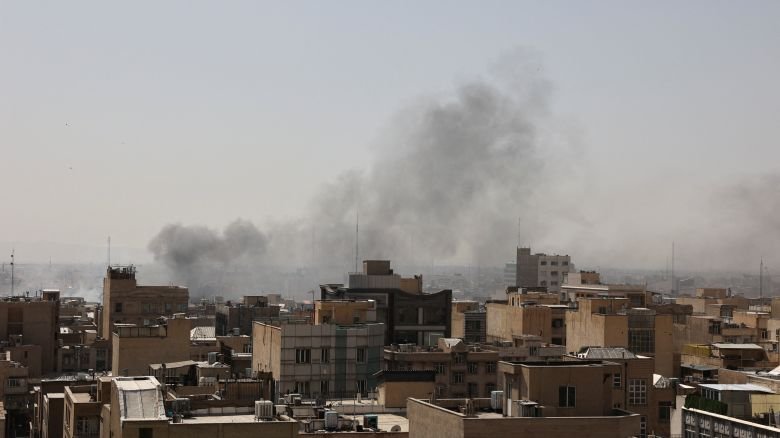
The geopolitical landscape in the Middle East took a dramatic and dangerous turn last night. The governments of Israel and the United States announced coordinated military strikes on Iran, framing their offensive as “pre-emptive”, meant to neutralise an imminent threat. In the terse language of official communiqués and press briefings, this was presented as a necessary act of self-defence against a hostile regime whose nuclear and missile programmes were said to endanger regional and international security. We all know that’s complete and utter bullshit, and beneath the polished rhetoric lies a troubling pattern of justification that stretches back decades, where the invocation of “pre-emptive” action has often served as a veneer for aggression and geopolitical interference rather than genuine defence.
Both Israeli and American officials have publicly defended the operation. Israel’s defence minister said that the strikes were intended “to remove threats to the State of Israel,” emphasising anticipated missile and drone attacks from Iran as the justification. The orange-coated, kiddy-fiddling golf cheat echoed this framing, asserting that the objective was to “defend the American people by eliminating imminent threats from the Iranian regime.” These declarations were issued shortly before explosions were reported in Tehran and other Iranian cities, and Israel declared a special state of emergency as sirens sounded across its territory.
In international law and diplomatic norms, anticipatory self-defence is a fraught concept. Traditional frameworks permit the use of force in response to an actual or unquestionably imminent attack, that is, one about to occur with little or no time for deliberation, but they don’t condone striking first simply because a future threat might exist. Well-established legal analysis emphasises that pre-emptive self-defence, if accepted at all, must meet a stringent test: the threat must be instant and overwhelming, leaving no choice of means and no moment for deliberation. Absent such conditions, what is labelled as pre-emption effectively becomes preventive war - an offensive use of force to alter the balance of power or to decapitate a rival before it has actually attacked, rather than stopping an attack already on its way.
That distinction is more than semantic. The difference between lawful anticipatory self-defence and unlawful preventive strikes goes to the heart of the international legal order. Article 2(4) of the United Nations Charter prohibits the use of force except in self-defence or with Security Council authorisation; Article 51 recognises the inherent right of self-defence in response to an armed attack. But it does not provide carte blanche for states to pick and choose when a potential threat justifies the first use of force. When leaders bypass that nuance, as they have done in the current escalation, they undermine the very norms that are supposed to constrain violence among sovereign states.
Critics inside and outside the region have been quick to denounce the strikes not as defensive necessities, but as unprovoked aggression. Political leaders, activists, and legal scholars have pointed out that the Iranian government had not launched an imminent attack against either Israel or the United States at the time of the bombing - a key criterion for legitimate pre-emptive action. Diplomacy was still technically in play, though faltering, and the rapid transition from negotiation to bombardment suggests that force was always the preferred option rather than a last resort. From the very first day of Trump’s second term, it was glaringly obvious that regime change in Iran was a priority and that his preferred path was aggression, not diplomacy. Voices from across the Global South and non-aligned movements describe the offensive as a blatant violation of the UN Charter and a dangerous precedent for future great-power interventions.
From this vantage point, the pre-emptive label looks less like a neutral description and more like a political tool used to sanitise an offensive operation and garner public support by conjuring the image of imminent danger. This pattern has historical echoes. In previous conflicts, similar justifications have been offered to neutralise perceived threats before they materialise. Yet every time, a closer look often reveals that intelligence about those threats was ambiguous, overstated, or selectively interpreted to fit a policy that favoured military action over diplomacy. Certain terms in nuclear negotiations, and their continued missile development, were cited by Western officials as proof of a growing threat. But diplomacy had not been exhausted, and there was no clear evidence that Iran was about to launch a strike on Israel or the United States, at least not imminently. Indeed, long-standing mistrust, conflicting strategic interests, and regional factionalism have for years complicated any honest assessment of intent. To leap from diplomatic friction to full-scale military assault on the basis of potential or future threats is to abandon restraint and to normalise pre-emptive violence.
It’s always been about regime change; about Israeli hegemony in the region. Israel has admitted so repeatedly for decades. It’s always been about Greater Israel. Anyone who thinks that either Netanyahu or Trump cares about the plight of ordinary Iranians is a fucking idiot. Anyone who thinks the strike on a girls' school in Minab, killing dozens, was a mistake, hasn’t been paying attention.
If Trump and Netanyahu are allowed to get away with this, one real question remains... who’s next?
To ensure I’m able to keep sharing my thoughts as clearly as possible despite my gradual cognitive decline, I’ve started relying on Grammarly to polish sentence structure, improve clarity and conciseness (helping rein in my tendency to ramble a bit), suggest words when they slip my mind, and ensure each post stays true to my own natural tone and voice. I write it, Grammarly fixes it. Respect for the reader.
If you’re enjoying my posts, please consider chucking in a few bob to support me.
